
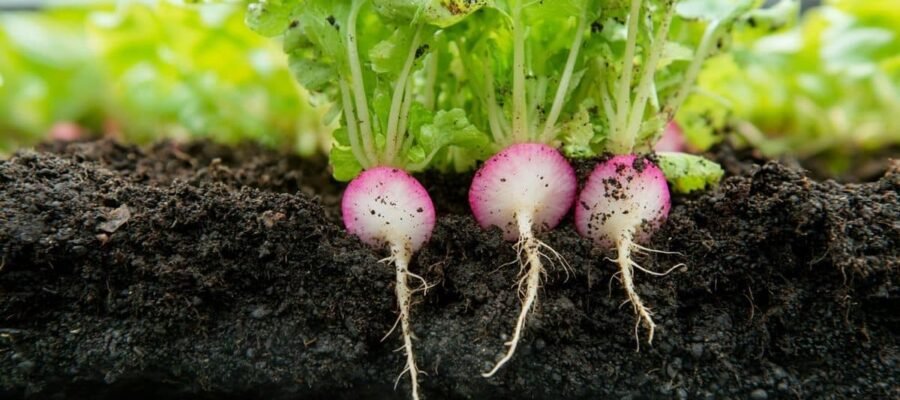
Radishes are known for their rapid growth, but improper watering can turn these vegetables into bitter crops. Constant humidity is the key to avoiding this disappointment, as urban gardening experts point out.
Because consistent humidity is key
As the soil dries out, radish plants experience water stress. This situation triggers an increase in the production of sulfur compounds, responsible for the pungent taste. Novice gardeners often forget that these vegetables need a regular wateringespecially when it’s hot.
- Water in the morning to avoid excessive evaporation.
- Check the soil moisture burying a finger up to the first phalanx.
- Avoid excess water that rot the roots. Light but frequent watering is best.
The choice of container and substrate: a common mistake
Many urban gardeners use unsuitable pots, compromising the quality of their crops. Depth and drainage These are criteria that are often overlooked.
The ideal characteristics of a radish container
A planter with a minimum depth of 15 cm it is essential to allow good root formation. Classic flower pots, which are too narrow, limit growth. Choose growing containers or mini-balcony greenhouses with drainage holes.
Prepare a well-drained, nutrient-rich substrate
A mixture of universal soil, horticultural sand and compost offers the best growing conditions. This lightweight substrate allows for optimal aeration of the roots and retains moisture without retaining it. Avoid compacted soil that suffocates plants.
Sowing errors and varietal errors: optimizing the harvest
The time and method of sowing, as well as the choice of varieties, directly influence the final result. Rigorous planning it is necessary to maximize your chances of success.
Planting techniques for harmonious growth
- Sow in the evening to avoid thermal stress on the seeds.
- Bury the seeds to a depth of 6-12 mm and spaced 2.5 cm apart.
- Dilute the plants 10 cm distance to avoid competition between the roots.
Select varieties suited to your climate
Some varieties are liked French breakfast OR Sora they are designed for growing in pots and offer a delicate flavor. Winter radishes, more resistant to the cold, are suitable for late harvests. Avoid Asian varieties (Daikon) if you are looking for a less spicy flavor.
Solutions for an optimal harvest
An appropriate planting program
Favor them cold periods (spring and autumn) to avoid premature flowering. Sow on a balcony every 15 days for a continuous harvest.
The importance of soil pH
Radishes prefer soil slightly acidic (pH 5.5 to 6.5). Use a pH meter to adjust the substrate. Add compost to improve soil structure and regulate its acidity.
Manage extreme temperatures
Del short, cool days promote slow growth, resulting in rounder, less spiny radishes. During a heat wave, water more frequently and place containers in the shade.
: Turning mistakes into successes
By correcting these three major mistakes – irregular watering, ill-suited containers and inappropriate variety selection – gardeners can transform their radish crops. Constant humidity, a well-drained substrate et rigorous planning they are the pillars of a successful culture. Experiment with these techniques to discover a new dimension of your urban garden.
latest posts published

Waterfall table: refinement for your home

Using hexagonal screen in decorative furniture

Decorating trends for 2023!

Color trend for 2023 in your home

Luxury Furnishings: Refinement and Exclusivity for Unique Environments

Balconies become essential in a good apartment

João Gasparini Building: the perfect environment for your company

Buying Modern and Luxury Sofas: Transforming your Home

The 5 types of sofas to choose from and furnish your home