
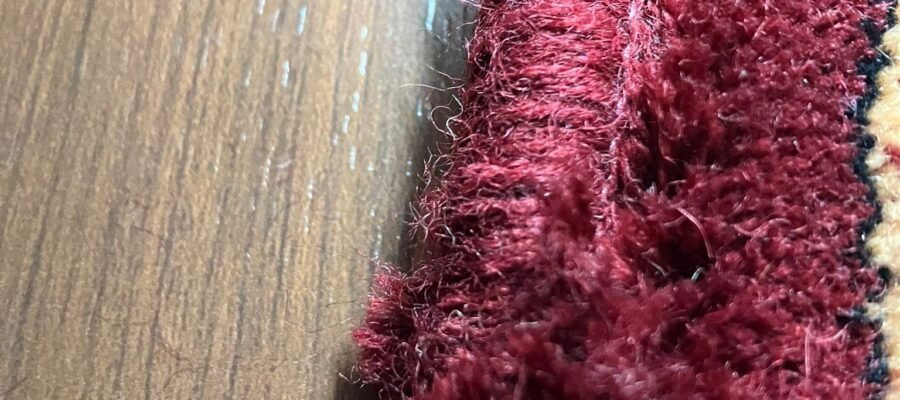
Carpets are often delivered rolled in a transparent film, mechanically stretched by the production factory. Although this type of packaging protects the product during transportation, many customers have difficulty choosing the right carpet. One of the most common accidents that occur is deterioration of the feston (stitched edge) when the carpet is opened or rolled. In this article, we will discuss the correct steps to follow to avoid this problem and protect your carpet in the long term.
1. Carefully remove the protective film
The transparent foil that wraps the carpet has the function of protecting the fiber and its edge during transport. When unpacking the film it is essential to do so carefully so as not to cause excessive tension on the carpet, especially on the edges. Use a utility knife or scissors to cut the film, but avoid cutting too close to the edge of the carpet, to avoid injury to the festoon.
2. Let the carpet lie naturally
Once the film has been removed, it is important to let the carpet “relax” before completely unrolling it. If the carpet has been laid, the fibers and edges may be stretched and cause warping. Stretch the carpet slightly, but do not force the edges, especially the festoon, which could be damaged if stretched too quickly.
3. Spread the carpet on a flat surface
It is recommended to transport the carpet on a clean and flat surface, such as the floor. This way you will avoid the risk of hitting or rubbing the edges with sharp or hard objects. Make sure the space is large enough to allow the rug to lay out evenly, without having to pull it together.
4. Don’t force the carpet to run fast
Avoid trying to carry the rug too quickly or in one sudden motion. This can lead to breakage of the festoon or uneven stretching of the fabric. Instead, take it gradually, starting at one edge and working evenly across the length of the rug. If necessary, have two people help you to make the process easier, making sure that the edges are not too hard.
5. Carefully adjust the edges
If the carpet has a festoon it is essential to carefully check the edge immediately after unrolling. If you notice any bulges or irregularities in the festoon, correct them with a delicate movement, without pulling the edges of the material. If the festoon is slightly damaged, it can be corrected with a fine adjustment, but if the damage is significant, it is recommended to contact a carpet repair specialist.
6. Allow the carpet to recover
After unfolding the rug, let it sit for a few hours or even a whole day in the space where it will be used. This will allow the fibers to recover and stabilize, reducing the risk of subsequent deformations. If necessary, you can use a carpet brush or vacuum cleaner to remove any hangnails and improve the overall appearance.
7. Store the carpet in a suitable place
To avoid damage to the festoon or other parts of the carpet, be sure to store it properly when not in use. Rolled rugs should be stored in a cool, dry place, away from direct sunlight, to avoid yellowing or warping.
More tips
- Avoid cutting in the center of the roller. If you start cutting the film from the center, you risk cutting the material or festoon.
- Check the position of the festoon. The edge of the carpet may be visible through the cling film, so be careful not to stick the blade near it.
- Do not use inappropriate tools. Sharp objects, such as kitchen knives or inappropriate tools, increase the risk of damage.
latest posts published

Waterfall table: refinement for your home

Using hexagonal screen in decorative furniture

Decorating trends for 2023!
Color trend for 2023 in your home

Luxury Furnishings: Refinement and Exclusivity for Unique Environments

Balconies become essential in a good apartment

João Gasparini Building: the perfect environment for your company

Buying Modern and Luxury Sofas: Transforming your Home

The 5 types of sofas to choose from and furnish your home