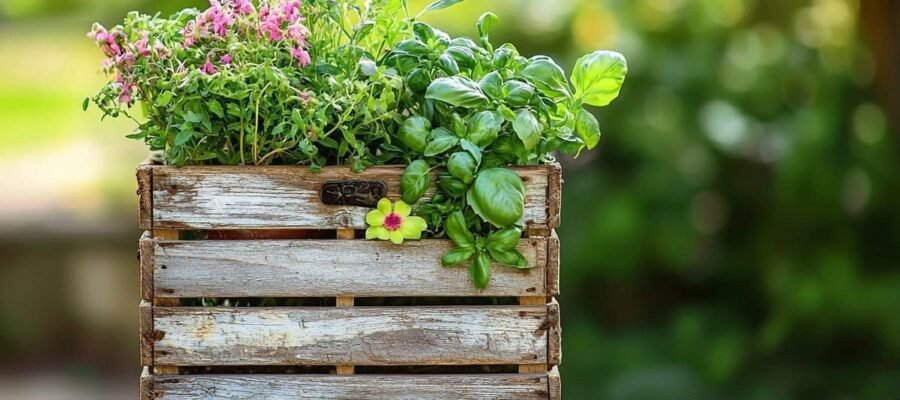
City dwellers are rediscovering the previously unsuspected potential of used wooden boxes to create aesthetic and functional urban gardens. These old industrial or agricultural containers offer an ecological and economical solution for growing aromatic plants, vegetables or flowers on balconies.
Choosing the right material for a successful transformation
Recycling bins – these large containers used in the food industry – form the ideal basis due to their robustness. Their depth (40 to 60 cm) allows them to accommodate the roots of tomato or potato plants. Choose boxes that have not been chemically treated or lightly sand those that have undergone surface treatment.
The Rise of the Upcycled Urban Garden
City dwellers are rediscovering the previously unsuspected potential of used wooden boxes to create aesthetic and functional urban gardens. These old industrial or agricultural containers (like wine crates or shipping pallets broken down into planks) offer an ecological and economical solution for growing aromatic plants, vegetables, or flowers on balconies, patios, and rooftops.
This trend is driven by several key factors that align perfectly with modern urban living:
1. Ecological and Economical Sustainability
Using wooden boxes is the epitome of eco-friendly gardening, embracing the principles of upcycling and waste reduction.
-
Zero-Waste: By diverting durable materials from landfills, gardeners reduce their environmental footprint.
-
Affordability: Used crates and pallets are often available for free or at a minimal cost, making sophisticated gardening accessible without the high expense of purpose-built terracotta or composite planters.
-
Natural Materials: Wood provides a natural, breathable environment for soil and roots, promoting better plant health compared to some plastic containers.
The key stages of metamorphosis
Sealing represents the crucial step:
- Apply a food-grade silicone sealant to all interior cracks
- Drill 5 to 8 drainage holes in the bottom with a 10mm drill bit
- Line the interior with a permeable geotextile to retain the soil
Create a fertile ecosystem in your living room
The recipe for the optimal substrate
Experts recommend a mixture consisting of:
60% universal organic soil.
25% homemade mature compost
15% vermiculite for aeration
Nutrition advice : the integration of organic fertilizer in slow-release granules allows up to 6 months of nutritional autonomy according to the tests conducted by Semisauvage.com.
The art of companion planting
Combine in the same box:
Basil + cherry tomatoes → repellent effect against aphids
Nasturtiums + radishes → attraction of pollinators
Rosemary + thyme → natural fungicide prevention
Reinvent your decoration with green furniture
Spatial arrangement techniques
Stack three staggered crates vertically to create a visually spectacular strawberry tower. Arrange several modules horizontally as a divider on the terrace while growing salads and spinach.
Design trick : paint the exterior with colored ecological paints (ochre red or fir green) to harmonize with your outdoor furnishings.
Intelligent lighting
Complete the installation with:
Suspended horticultural LED lights (minimum 20W/m²)
Strategically placed recycled aluminum reflectors
A digital programmer that regulates day/night cycles depending on the species
Care for your boxwood garden all year round
The adapted cultivation calendar
Spring: early sowing under a warming veil (arugula)
Summer: thick mulch (hemp straw) against evaporation
Autumn: Green manure such as white mustard
Winter: winter protection with micro-perforated plastic cover
Optimized water management
Install a connected drip system that can be controlled via smartphone (flow rate adjustable to 0.5 l/hour). Complete with underground humidity sensors that warn when the rate drops below 30%.
Environmental and social impact of creative recycling
A recent study shows that each case processed can be reduced by up to:
7 kg of CO₂eq compared to a new plastic container
12 liters of water saved in the process
23% increase in local biodiversity measured in six months
Collaborative workshops are multiplying in French cities where residents exchange advice and plants by identifying free collection points at local businesses. This circular trend is gradually transforming our relationship with industrial waste and fueling a new form of ecological activism that is pragmatic and accessible to all budgets.
By transforming simple wooden containers into functional garden spaces, city residents are successfully proving that a thriving green sanctuary is possible even in the smallest urban setting.
latest posts published
Waterfall table: refinement for your home

Using hexagonal screen in decorative furniture
Decorating trends for 2023!
Color trend for 2023 in your home
Luxury Furnishings: Refinement and Exclusivity for Unique Environments

Balconies become essential in a good apartment
João Gasparini Building: the perfect environment for your company
Buying Modern and Luxury Sofas: Transforming your Home

The 5 types of sofas to choose from and furnish your home